
Estimated reading time: 7 minutes
Key Takeaways
- Headless e-commerce offers a flexible, scalable solution for online retailers.
- Separating the frontend and backend allows for enhanced customization and adaptability.
- APIs enable seamless integration with third-party tools and improved customer experiences.
- Adopting headless commerce positions businesses for future growth in the digital marketplace.
Table of Contents
- Introduction
- What is Headless e-commerce?
- Benefits of Headless e-commerce
- Choosing the Right Platform
- Role of Headless CMS in E-commerce
- The Future of E-commerce with Headless Architecture
- Empowering Digital Marketers with Headless e-commerce
- Conclusion
- FAQ on Headless E-commerce
- Getting Started with Headless Commerce
Introduction to Headless E-commerce
In the current digital age, traditional e-commerce platforms face several challenges. These include limited customization options and slower adaptation to emerging technologies. In contrast, headless e-commerce offers a fresh approach that addresses these issues, paving the way for businesses and digital marketers to thrive. This comprehensive guide will explore the benefits and significance of headless e-commerce in depth.
What is Headless E-commerce?
Definition of Headless E-commerce
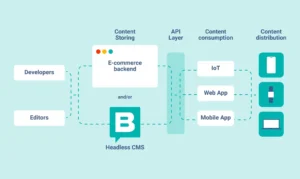
Headless e-commerce is an architectural approach where the frontend (presentation layer) is separated from the backend (commerce functionality). This decoupling allows businesses to manage content and products across various channels, like websites, mobile apps, and IoT devices, without the constraints of a monolithic system.
Traditional vs. Headless Architecture
In traditional e-commerce platforms, the frontend and backend systems are intertwined, which limits flexibility and scalability. By contrast, headless architecture provides a more versatile solution through APIs, allowing for greater customization and adaptability.
Benefits of Headless Commerce
Enhanced Performance and Faster Load Times
Decoupling the frontend from the backend optimizes performance, resulting in faster load times and a better user experience. Faster load times directly affect user satisfaction and conversion rates.
Improved Customer Experience
Businesses can now create customized and seamless interfaces across various devices and platforms. This adaptability enhances the overall customer journey, providing a consistent and engaging user experience — ultimately resulting in boosted eCommerce sales.
Greater Flexibility and Scalability
The modular nature of headless commerce allows businesses to react swiftly to market changes and expand their operations efficiently without revamping the entire system. Discover More
Simplified Integration with Third-Party Tools
APIs make it easy to integrate various third-party services, enhancing functionality without disrupting existing systems. This simplifies the process of expanding capabilities and improving customer experiences.
Choosing the Right Headless Commerce Platform
Key Factors to Consider
- Ease of Integration: Look for robust APIs that ensure seamless integration with existing systems.
- Scalability: Choose a platform that can handle growth in traffic and transaction volumes.
- Support and Community: Opt for platforms with strong support systems and active developer communities.
Popular Headless Commerce Platforms
- Shopify Plus: Offers user-friendly interfaces and a vast ecosystem of apps.
- BigCommerce: Known for flexibility and features suitable for diverse business sizes.
- Adobe Commerce (formerly Magento): Highly customizable with an extensive community. Explore Options
Role of Headless CMS in E-commerce
Understanding Headless CMS
A headless CMS separates content creation and storage from the presentation layer, delivering content via APIs to any frontend. This separation offers flexibility in how content is displayed and interacted with.
Advantages of Integrating Headless CMS
- Consistent Content Delivery: Uniform management and delivery across multiple channels.
- Enhanced Personalization: Tailor experiences using customer data.
- Future-Proofing: Easily adapt to new platforms and technologies.
Examples of Headless CMS Solutions
- Contentful: An API-first platform for content management across channels.
- Adobe Experience Manager: Provides powerful tools for personalization and management.
- Amplience: Specializes in dynamic content delivery and rich media management. Find Out More
The Future of E-commerce with Headless Architecture
Emerging Trends
- Omnichannel Experiences: Enable seamless shopping across web, mobile, and social media.
- Personalization: Use AI and machine learning for tailored recommendations.
- Voice Commerce: Integrate with voice-activated devices for hands-free shopping. Discover Trends
Predictions for Online Retail Evolution
As headless architecture becomes more prevalent, businesses can expect increased agility and innovation in their e-commerce strategies. Adopting headless solutions positions businesses to meet future customer expectations effectively.
Potential Challenges
- Technical Complexity: Implementing headless systems may require advanced technical expertise. Partnering with experienced developers is advisable.
- Cost Considerations: Initial investments can be high, but the long-term benefits often outweigh the costs.
Empowering Digital Marketers with Headless Commerce
Enhanced Campaign Management
Digital marketers benefit from improved campaign management, allowing for efficient strategy implementation without backend constraints.
Advanced Analytics Integration
Integration with sophisticated analytics tools provides deeper insights into customer behavior, supporting data-driven decision-making and improving marketing ROI.
Personalization Strategies
Deliver customized content and offers based on user behavior and preferences for a more targeted approach.
Case Study: Burrow’s Success with Headless Commerce
Furniture company Burrow saw significant improvements in conversion rates and site performance by adopting a headless solution. Read Case Study
Conclusion
Recap of Key Points
Adopting headless e-commerce offers benefits like enhanced performance, flexibility, and improved customer experiences.
Looking Ahead
Embracing headless architecture positions businesses for ongoing success in an evolving digital marketplace.
Call to Action
Consider implementing headless solutions to stay competitive. Explore further resources or seek professional consultation to begin your journey.
FAQ on Headless E-commerce
Common Questions
1. What distinguishes headless commerce from traditional commerce?
Headless commerce separates the frontend from the backend, allowing for greater customization and flexibility, unlike traditional commerce, where both are tightly coupled, limiting adaptability and scalability.
2. Is headless commerce suitable for small businesses?
While it offers significant benefits, small businesses with limited technical needs may find traditional platforms more manageable and cost-effective.
3. How does headless commerce affect SEO practices?
Getting Started with Headless Commerce
Step-by-Step Guide
- Assess Business Needs: Identify areas needing improvement.
- Choose the Right Platform: Align choices with business goals.
- Plan Integration: Create a roadmap for implementation.
- Partner with Experts: Engage experienced developers or agencies.
- Test and Optimize: Monitor performance and adjust as needed.
By following these steps, businesses can harness the power of headless e-commerce to meet the ever-changing demands of the digital world.